Open Rehearsal: BANTU
Fri 25.09.26, 19:30
Pina Bausch Centre under construction, Bundesallee 260, Wuppertal
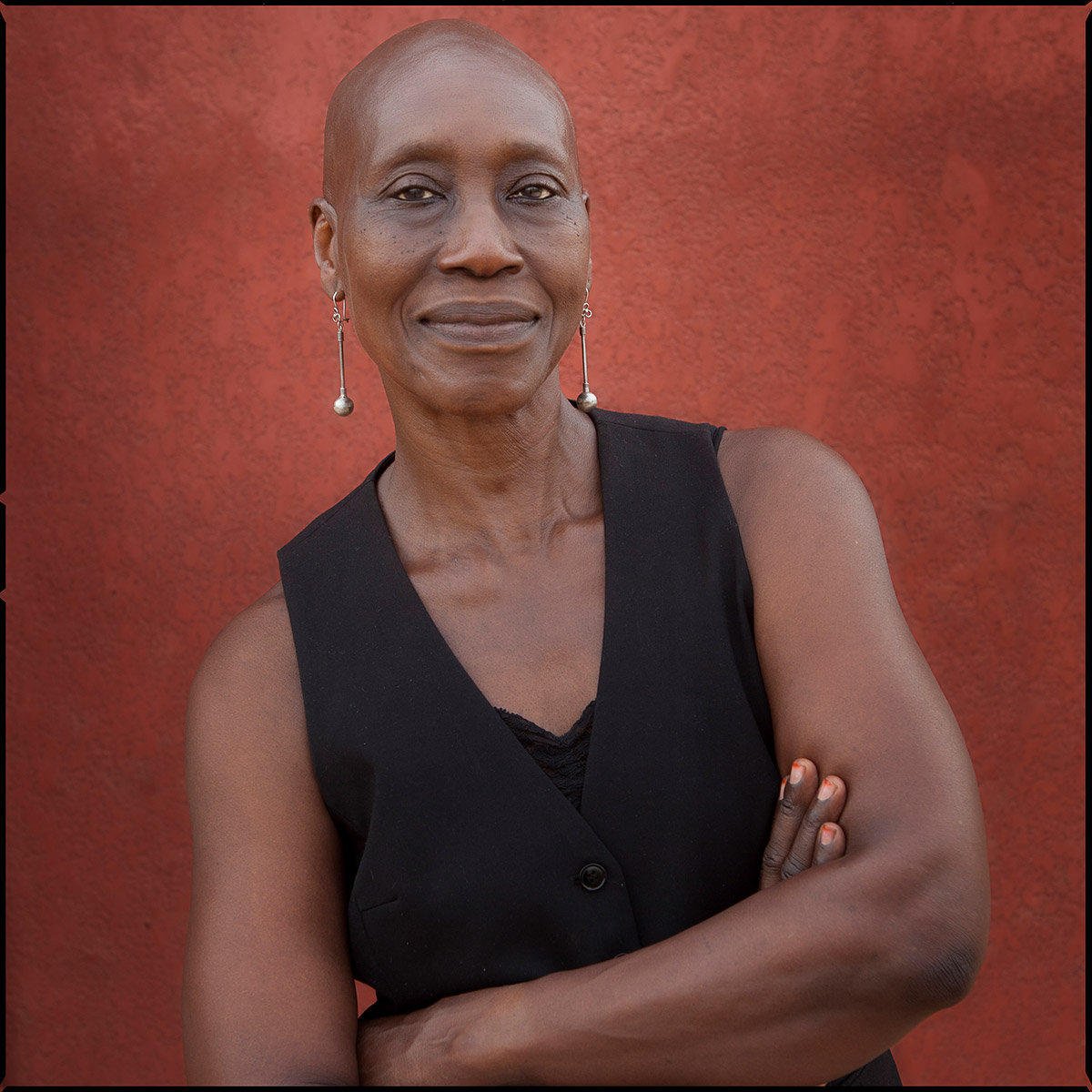
Featuring Germaine Acogny, Gregory Maqoma and dancers from the ensemble
International productions will be one of the four core areas of focus at the Pina Bausch Center. We are thrilled that, to mark the Schauspielhaus’s 60th anniversary, Germaine Acogny and her company will be working with us as artists-in-residence. On her journey between the Ruhrtriennale and Amsterdam, the dance legend from Senegal has chosen the Pina Bausch Center under construction in Wuppertal as her preferred venue. We thank the Ruhrtriennale for its collaboration. There, with Josephine and Bantu, “the latest works by two powerful choreographic voices can be experienced—works that do not merely illustrate history, but break it open. In both pieces, the body stands at the center as an archive of colonial imaginaries, history, resistance, and redefinition.”
Gregory Maqoma has created Bantu, a choreography for twelve dancers from diverse traditions who bring their art together in a joyful spirit of unity, as a tribute to the influences of Germaine Acogny and her École des Sables. Bantu draws on the word’s etymology: humanity and connectedness. Bantu is a celebration of life, without ignoring the social reality of the continent. It is an energetic dance piece that strives for universal humanity.
CARTE BLANCHE TO GERMAINE ACOGNY: She is considered the mother of contemporary African dance and is also one of the most important artistic voices on the entire continent. Rooted in traditional West African dances and drawing inspiration from European choreography, she developed her own unique technique. Acogny has now been active on international stages and as a teacher of young dancers in Senegal and around the world for more than 50 years.
At the École des Sables dance center, which she founded with Helmut Vogt, she passes on her knowledge; a fellowship organized in collaboration with the Pina Bausch Foundation focuses on education and support. In 2019–2020, common ground[s] • The Rite of Spring was created as a co-production of the Pina Bausch Foundation, École des Sables, and Sadler’s Wells.
At the Ruhrtriennale, Josephine and Bantu offer “the chance to experience the latest works by two powerful choreographic voices who don’t merely illustrate history, but break it open. In both pieces, the body takes center stage as an archive of colonial imaginaries, history, resistance, and redefinition.” At the open rehearsal, we’ll see excerpts from BANTU performed by the fantastic ensemble. If you’d like to experience the entire evening, be sure to quickly grab one of the last remaining tickets for As We Are at the Gebläsehalle in the Duisburg-Nord Landscape Park.
Bantu is a co-production of The Joyce Theater in New York, the Théâtre de la Ville in Paris, and the Théâtres de la Ville in Luxembourg.
About the artist Germaine Acogny and Gregory Maqoma
Germaine Acogny is regarded worldwide as the ‘mother’ of contemporary African dance. She dances, choreographs and teaches all over the world and has become an influential ambassador for African dance. Together with her husband Helmut Vogt, she founded the École des Sables in 2004, the international centre for traditional and contemporary African dance in Toubab Dialaw, Senegal. Between 1977 and 1982, she was artistic director of MUDRA AFRIQUE (Dakar), founded by Maurice Béjart and the Senegalese president and poet Léopold Sédar Senghor. For her artistic work, the dance icon Germaine Acogny has received numerous international awards, including the Golden Lion at the Venice Dance Biennale in 2021 for her life’s work..
Gregory Maqoma is a specialist in movement for dance, theatre, fashion, opera, film, tv broadcast, music and producing live shows for events, national and International touring. His love for dance has seen him expand to creating and producing theatrical productions, films and artists. Born in Soweto, October 16 of 1973, Gregory Vuyani Maqoma became interested in dance in the late 1980s as a means to escape the political tensions growing in his place of birth.